
After the heat and energy of Hanoi, Sapa felt like stepping into an entirely different country. Terraced rice fields cascading down impossibly steep hillsides, mist settling into valleys each morning, mountains layered in every shade of green — Sapa is the part of Vietnam that nobody quite prepares you for.
We hired a private car from Hanoi, picked up friends from the airport along the way, and drove straight into the hills. Two nights here were enough to fall completely in love with the place.
Getting to Sapa
We arranged a private car from Hanoi — a comfortable, scenic drive that also let us pick up friends arriving at the airport along the way. The journey takes you gradually upward, the landscape changing from flat city sprawl to terraced hillsides as you climb into Lao Cai province.
Alternative: The Sapa Express train (which we used on the way back) is also an excellent option — more on that below.
Day 1 — Arrival, Cat Cat Village and Dinner
We arrived in the afternoon and had a late lunch at Le Petit Gecko Restaurant — genuinely amazing food, the kind of meal that makes you forget you’ve just spent hours in a car. A wonderful first impression of Sapa’s food scene.
After lunch, we headed straight to Cat Cat Village — and it was simply beautiful. This is a H’mong ethnic minority village just outside Sapa town, with stone pathways winding past traditional houses, waterfalls and those famous terraced fields stretching out below. We rented traditional dresses there and took photos — it felt playful and joyful, and the surroundings made every photo look like a postcard.
For dinner we went to Ladybird Restaurant Hotel Cafe — very, very good, and good enough that we returned the following night too.
Where we stayed: Eden Boutique Hotel — comfortable, well located, and offered massages that were genuinely excellent. After a day of walking Cat Cat’s hills, this was exactly what we needed.
Day 2 — Fansipan Cable Car and the Glass Bridge
This was the highlight of our Sapa visit.
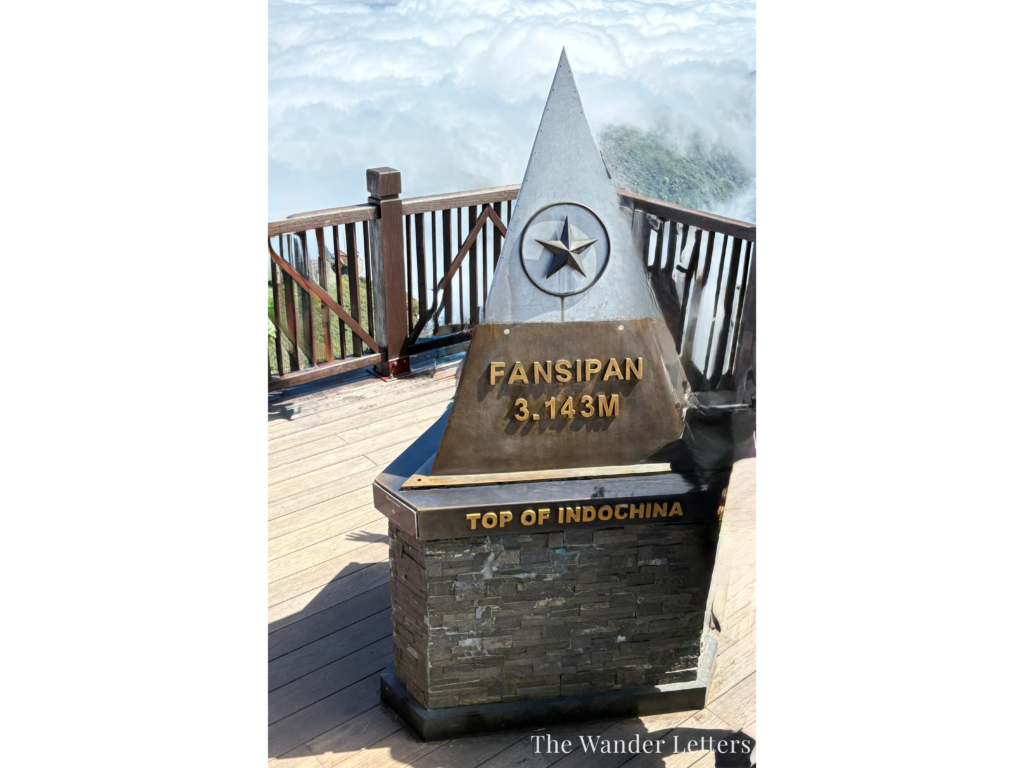
We took the cable car up to Fansipan — the highest peak in Southeast Asia, often called the “Roof of Indochina.” The cable car ride itself is an experience — sweeping views over the terraced valleys and mountain ridges as you ascend, the kind of view that makes you go quiet for a few minutes.
The Rong May Glass Bridge (Dragon Cloud)
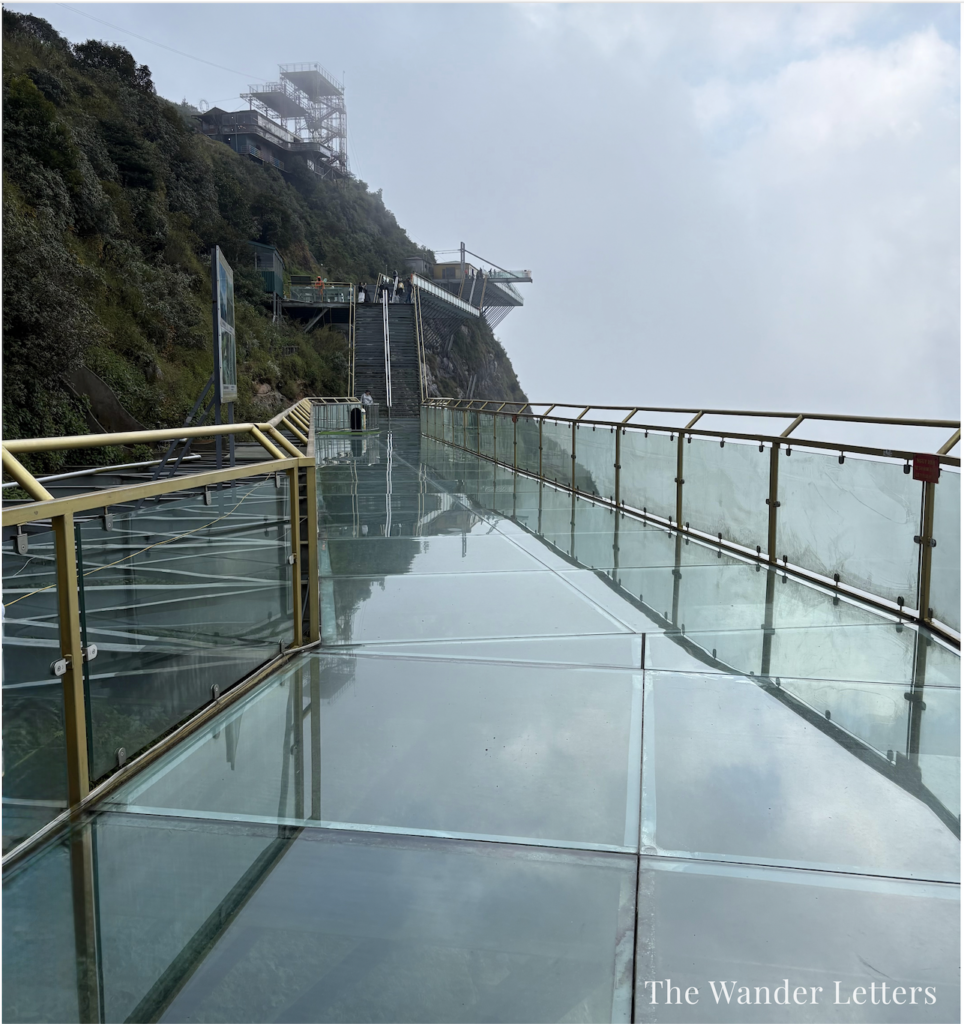
One of Sapa’s most thrilling experiences sits about 17km from Sapa town at the O Quy Ho Pass — the Rong May Glass Bridge, also called the Dragon Cloud Glass Bridge. Suspended 300 metres above the valley floor at an altitude of over 2,000 metres, the glass walkway is not for the faint-hearted. Standing on the transparent floor with the valley falling away beneath your feet is genuinely heart-racing.
Note that this is a separate attraction from the Fansipan summit complex — many visitors assume the glass bridge is at the top of Fansipan, but the two are in different locations. If you want to experience the glass bridge, plan it as its own stop on the way to or from the O Quy Ho Pass.
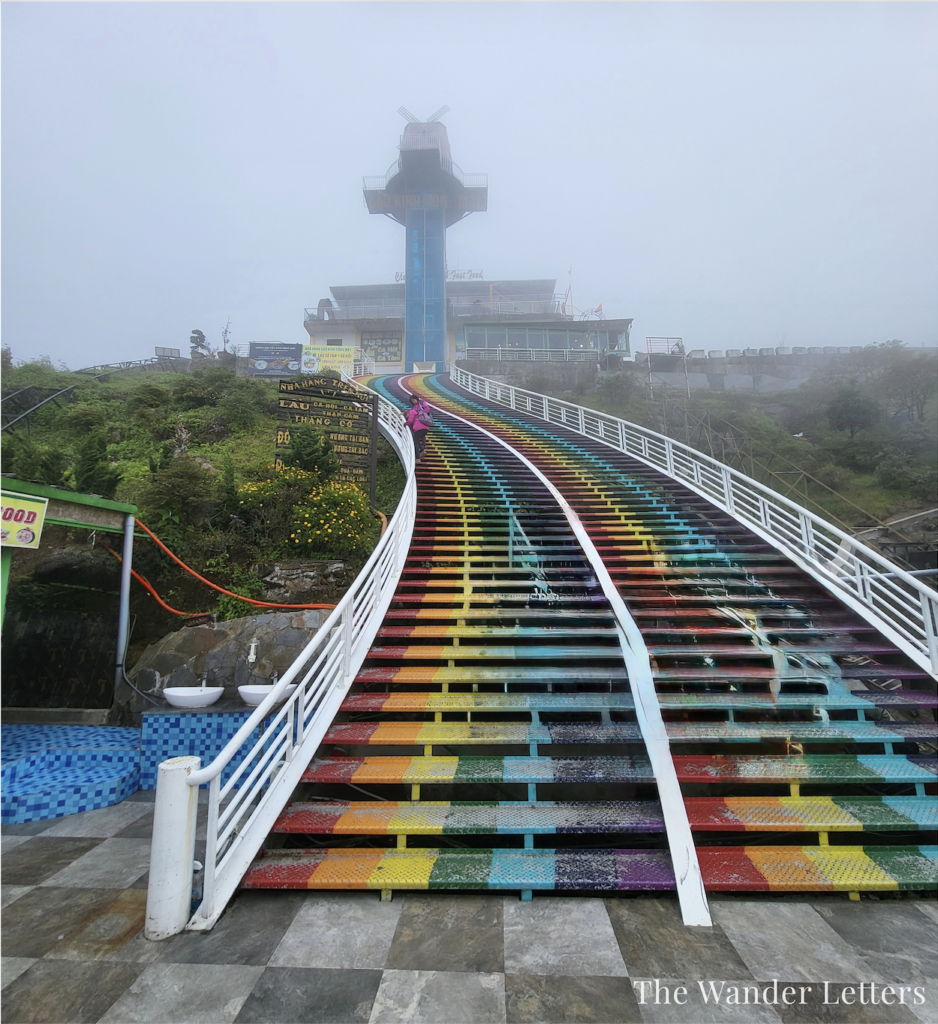
That evening, dinner again at Ladybird Restaurant Hotel Cafe — we genuinely couldn’t resist going back.
Practical Details
Where to Stay
Eden Boutique Hotel — comfortable rooms, excellent location, and a spa offering proper, relaxing massages after a day of trekking and sightseeing.
Where to Eat
- Le Petit Gecko Restaurant — exceptional food, great for arrival day
- Ladybird Restaurant Hotel Cafe — so good we ate there twice
What to Do
- Cat Cat Village — H’mong village, waterfalls, terraced fields, dress rental for photos
- Fansipan cable car — highest peak in Southeast Asia
- The glass bridge at the summit
Getting Back — The Sapa Express Train
We returned to Hanoi by train — the Sapa Express — and it was excellent. Comfortable, scenic and a relaxing way to end the Sapa leg of our trip after two active days in the mountains.
We booked this in advance. Find tickets here – >
Budget
For our family of three — including private car transfer, hotel, food, the Fansipan cable car and the train back to Hanoi — we spent approximately ₹13,000. Sapa offers extraordinary value for the scale of the experience.
Why Sapa is Worth the Detour
Sapa is often treated as an optional add-on to a Vietnam itinerary, squeezed in if there’s time. We’d argue the opposite — it’s one of the most visually stunning parts of the country and deserves at least two full days.
The combination of ethnic village culture, dramatic mountain scenery, and an experience as singular as standing on the highest point in Southeast Asia makes Sapa a destination in its own right, not just a side trip.
If you’re building a Vietnam itinerary that includes Hanoi, make the time for Sapa. The terraced hills, the mist rolling through the valleys each morning, and that cable car ride up to Fansipan are worth every hour of the journey.
Also read: Ultimate Vietnam Travel Guide | Halong Bay Cruise Guide | Phu Quoc Travel Guide