
My daughter had never been outside India.
Vietnam was her first international trip — and mine too, in a sense, because no amount of research prepares you for what Vietnam actually is. I expected something smaller, something rougher around the edges, something more like the Southeast Asia of twenty years ago that people still describe when they warn you about developing countries.
What we found was a country that surprised us completely. Modern infrastructure, extraordinary natural beauty, food that stopped us mid-conversation, and experiences — a cable car to the highest peak in Indochina, a luxury cruise through limestone karsts, rice terraces at altitude that looked painted — that we will talk about for the rest of our lives.
This is our complete Vietnam travel guide for Indian travellers. Everything we did, everything we wished we’d done differently, and everything you need to plan your own trip.
Why Vietnam Works So Well for Indian Travellers
Before the logistics, a word about why Vietnam specifically is such a good choice for Indian families making their first international trip or expanding their Southeast Asia itinerary.
Vietnam is more developed than most Indian travellers expect. Cities have excellent infrastructure, airports are modern, hotels across all price points are genuinely good, and the country has clearly invested heavily in tourism. You will not feel like you are roughing it unless you want to.
The scale of natural beauty is genuinely extraordinary. Halong Bay, the Sapa rice terraces, the beaches of Phu Quoc — these are not the kind of places that disappoint in person. If anything, they exceed what photographs suggest, which is rare.
And practically: Vietnam is manageable. Distances between major destinations are covered well by domestic flights, trains and roads. English is spoken in tourist areas. Food is varied enough that even picky eaters find something. It is, in short, a destination that rewards planning without punishing imperfection.
The India–Vietnam E-Visa — Everything You Need to Know
Indian passport holders require a visa to enter Vietnam. The good news is that Vietnam now offers an e-visa that is straightforward to obtain online.
Apply at: evisa.xuatnhapcanh.gov.vn (the official government portal — use only this URL)
Processing time: 3 working days typically, though applying 2 weeks before travel is recommended
Validity: The e-visa is valid for up to 90 days, multiple entry
Cost: Approximately $25 USD per person
Critical detail that caught us off guard: When filling in your e-visa application, you must specify your entry point (first city of arrival in Vietnam) and your exit point. If your itinerary involves entering through Ho Chi Minh City to connect to Phu Quoc, you must list Ho Chi Minh City as your entry point, even if you are only transiting and not staying. Get this right — it is checked at immigration.
Documents needed:
- Valid Indian passport (minimum 6 months validity beyond travel date)
- Recent passport-size photograph
- Travel dates and accommodation details
- Entry and exit points as per your itinerary
- Debit/credit card for the fee
Print a copy of your approved e-visa and carry it with your passport. Immigration officers check it alongside your passport on arrival.
Our Vietnam Itinerary — What We Did and What We’d Change
Our full Vietnam leg covered Ho Chi Minh City (1 night transit), Phu Quoc (3 nights), Hanoi (1 night), Sapa (2 nights), Halong Bay (1 night cruise) and Da Nang (2 nights). Here is an honest account of each.
Ho Chi Minh City — Transit Stop
We did not see Ho Chi Minh City. It was a one-night stop en route to Phu Quoc since there was no direct flight from Mumbai on our dates. We arrived, checked into a hotel near the airport, and flew to Phu Quoc the next morning.
If you are using Ho Chi Minh as a transit point: Book a hotel near Tan Son Nhat airport to minimise travel time. The city itself deserves at least 2-3 days if you want to explore it properly — the War Remnants Museum, Ben Thanh Market and the Mekong Delta day trips are all worth doing. We simply did not have the time on this trip.
Honest verdict: A transit stop only. Not a fair sample of a city that deserves more time.
Phu Quoc — The Holiday Destination That Exceeded Everything
Phu Quoc was the heart of our Vietnam trip and the destination I would return to without hesitation.
What we did not expect was the scale of what has been built here. VinWonders — a full theme park and entertainment complex — is world-class. The cable car across the sea to Hon Thom island is the world’s longest non-stop cable car over water. Grand World is an evening entertainment district with gondola canals and international food. And behind all of this, the island still has beaches, island hopping, fresh seafood and clear water.
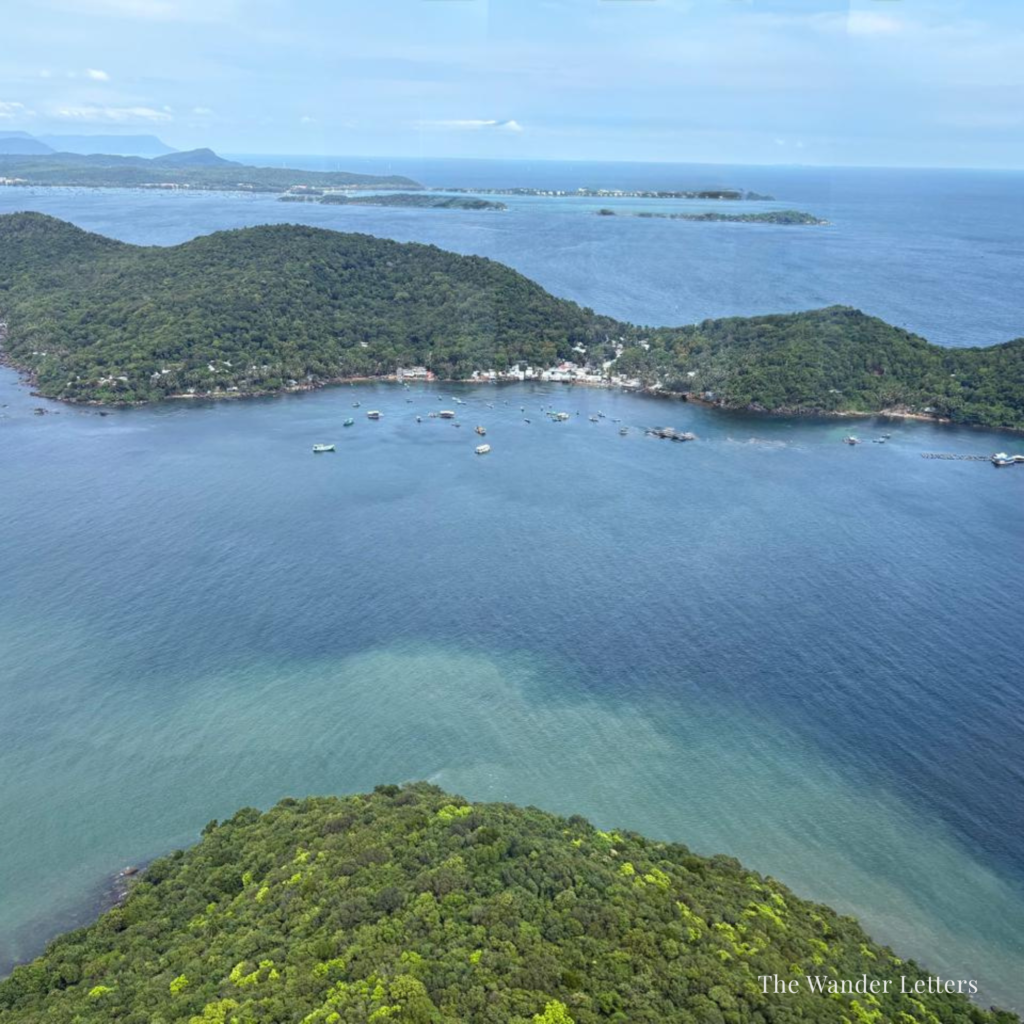
We had three nights and left wishing for more. My honest recommendation: four nights minimum. There is genuinely too much to fit into three.
What to do:
- VinWonders — full day, worth every rupee (₹3,500-4,500 per person)
- Grand World — evening, largely free, beautiful for a walk and dinner
- Island hopping — a half day by boat visiting Hon Thom, Starfish Beach and snorkelling spots
- Cable car — the journey is as spectacular as the destination
Where to stay: Your hotel location matters more in Phu Quoc than almost anywhere else. The island has two distinct areas — north (near VinWonders and Grand World) and south (near the cable car and island hopping). We stayed in both on different nights and would recommend north for families with children (for VinWonders access) and south for those prioritising the natural beauty.
→ Read our full Phu Quoc travel guide here
→ Where to stay in Phu Quoc — North vs South here
→ Phu Quoc budget guide for a family of 3 here
→ VinWonders vs Grand World — full comparison here
Hanoi — A Real City, Not a Tourist Postcard
Hanoi was the destination that most surprised me — in the sense of being exactly what it is rather than what I imagined.
If you have lived in or visited a dense Indian city — the old quarters of Pune, the busiest parts of Mumbai — Hanoi’s old quarter will feel familiar. Motorbikes everywhere, narrow streets, shops spilling onto pavements, noise and energy and food being cooked on every corner. It is alive in the way that dense Asian cities are alive, which is to say completely and sometimes overwhelmingly.
We had one night in Hanoi — enough to get a feel for the city and eat well, not enough to do it justice. For a proper Hanoi experience, allow 2-3 nights — Hoan Kiem Lake and the surrounding old quarter, the Temple of Literature, the street food scene (bun cha, pho, banh mi), and the night market on weekends are all genuinely worthwhile.
For us, Hanoi served as the gateway to Sapa — we arrived, rested, and departed the next day. That is a legitimate way to use it on a longer Vietnam itinerary.
Honest verdict: Not a place to linger on a short trip unless you enjoy dense, energetic city exploration. A genuine, working Asian capital that happens to have excellent food.
Sapa — The Mountains Delivered Everything They Promised
We knew Sapa would be beautiful. It had been on my list for years — the terraced rice fields, the H’mong villages, the altitude that turns summer into something almost temperate. We went in knowing what to expect and it still exceeded it.
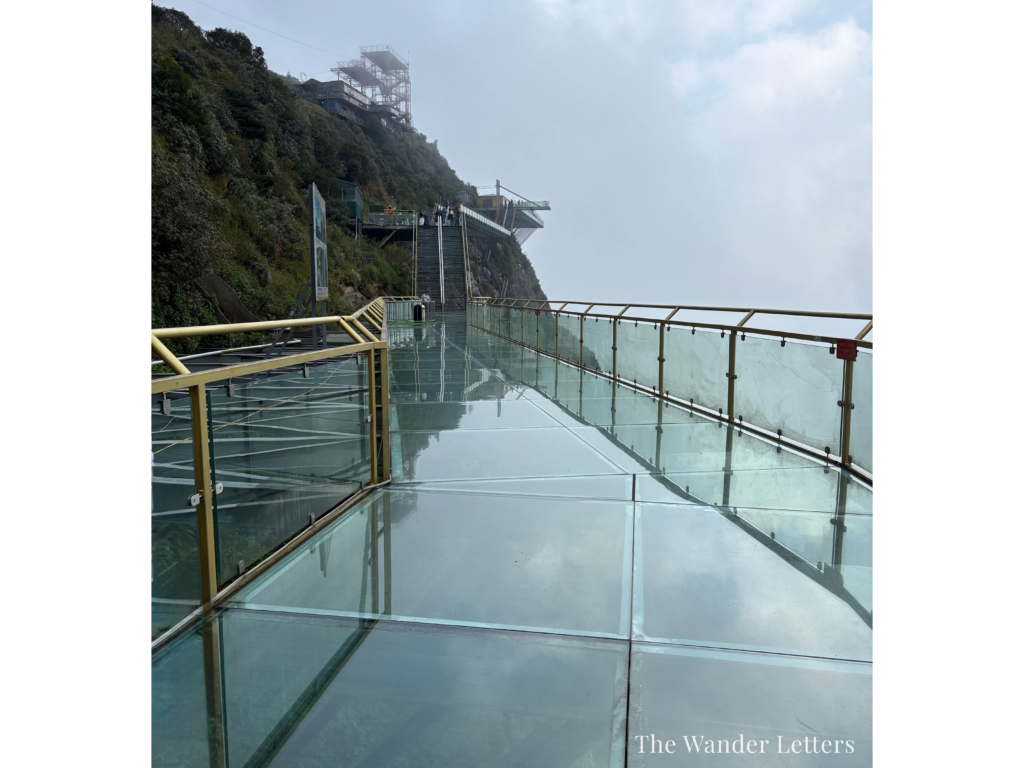
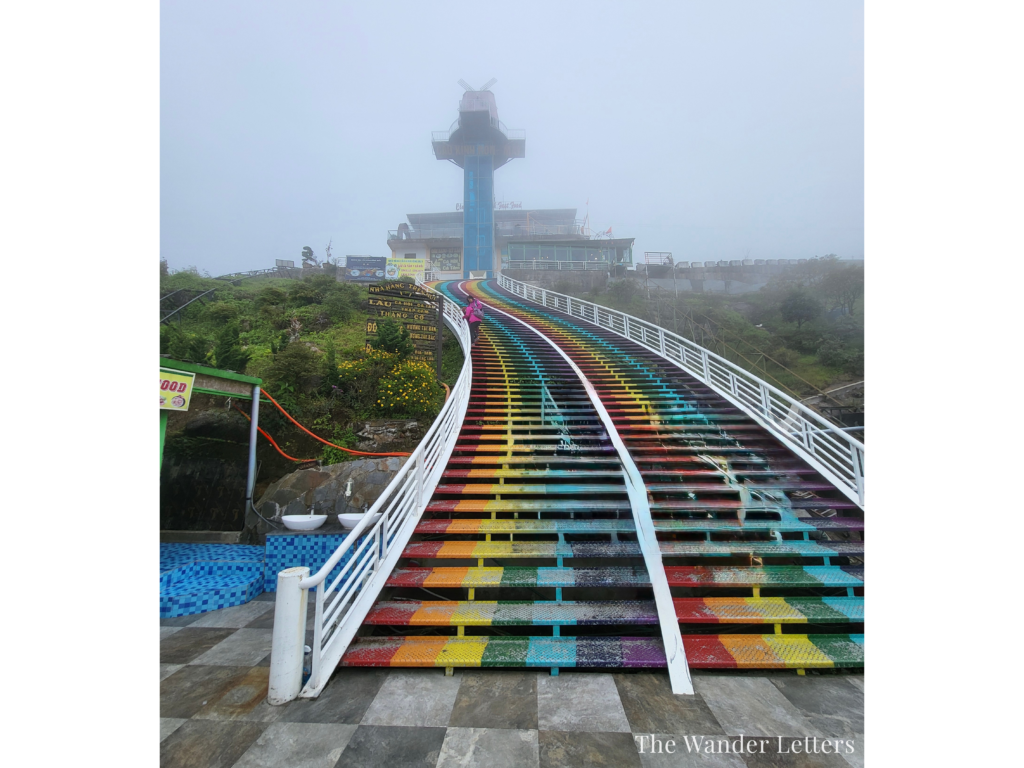
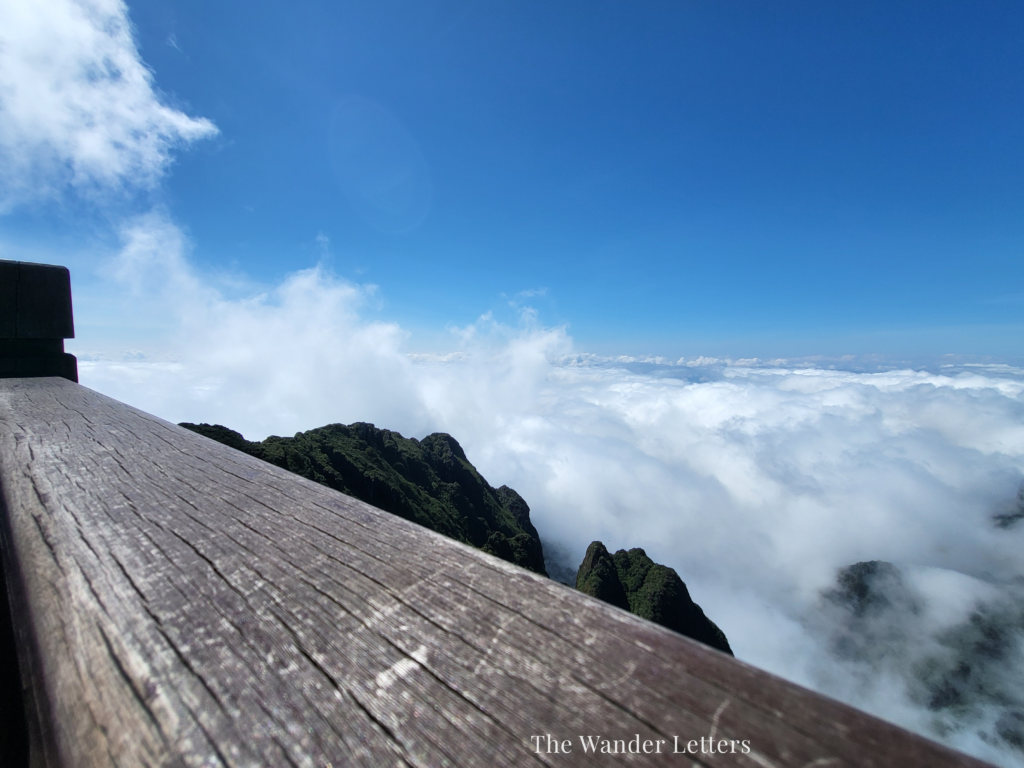
We hired a private car from Hanoi, picked up friends from the airport along the way, and drove up into the hills arriving in the afternoon. Two nights was the right amount of time for what we wanted to do — though the itinerary was full.
Day 1: Late lunch at Le Petit Gecko Restaurant (exceptional), Cat Cat village in the afternoon — stone pathways, waterfalls, rice terraces, traditional H’mong dress rental for photos — dinner at Ladybird Restaurant Hotel Cafe (so good we returned the next night).
Day 2: Fansipan cable car — the highest peak in Southeast Asia, the “Roof of Indochina” — followed by the glass bridge at the summit that tests your nerves and rewards you with views that justify every moment of the climb. Dinner again at Ladybird.
Eden Boutique Hotel was our base — comfortable, well-located, and offering massages that were exactly what two days of mountain activity required.
The return to Hanoi was by the Sapa Express train — modern, comfortable, scenic. We spent approximately ₹13,000 for our family of three for the full Sapa leg including private car, hotel, food and cable car.
→ Read our full Sapa travel guide here
Halong Bay — The Overnight Cruise That Surpassed Everything
Halong Bay is one of those places whose reputation you approach with mild suspicion. Can it really be as beautiful as every photograph suggests? Can an overnight cruise really be as good as people say?
The answer, in our case, was yes to both — and then some.
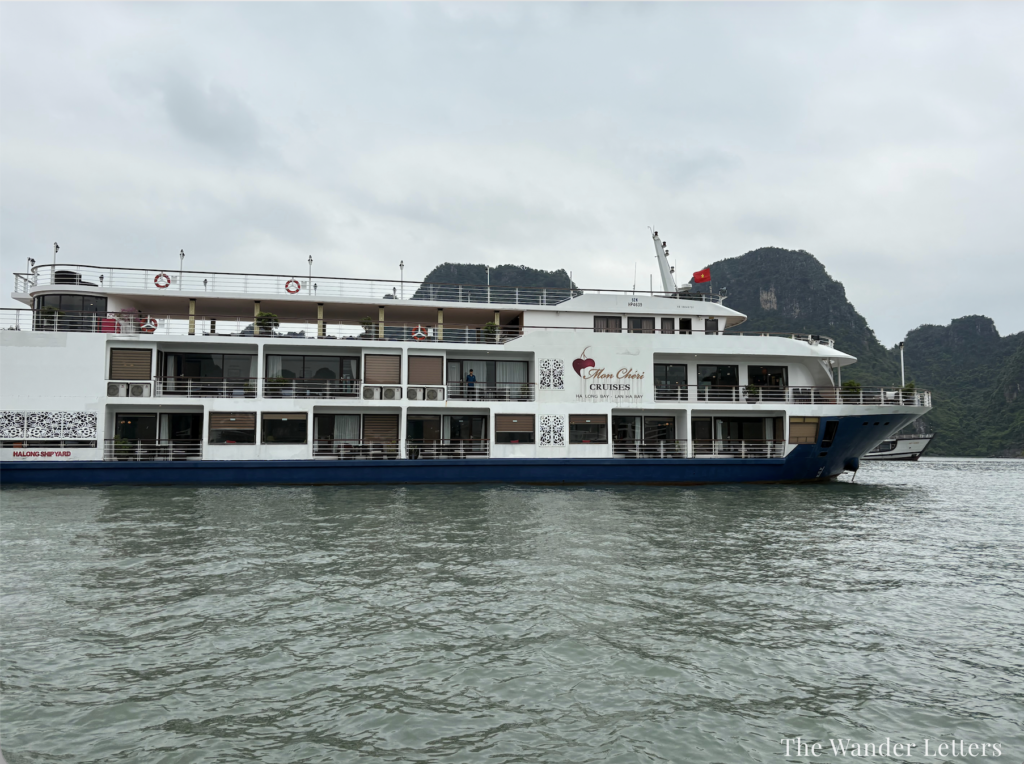
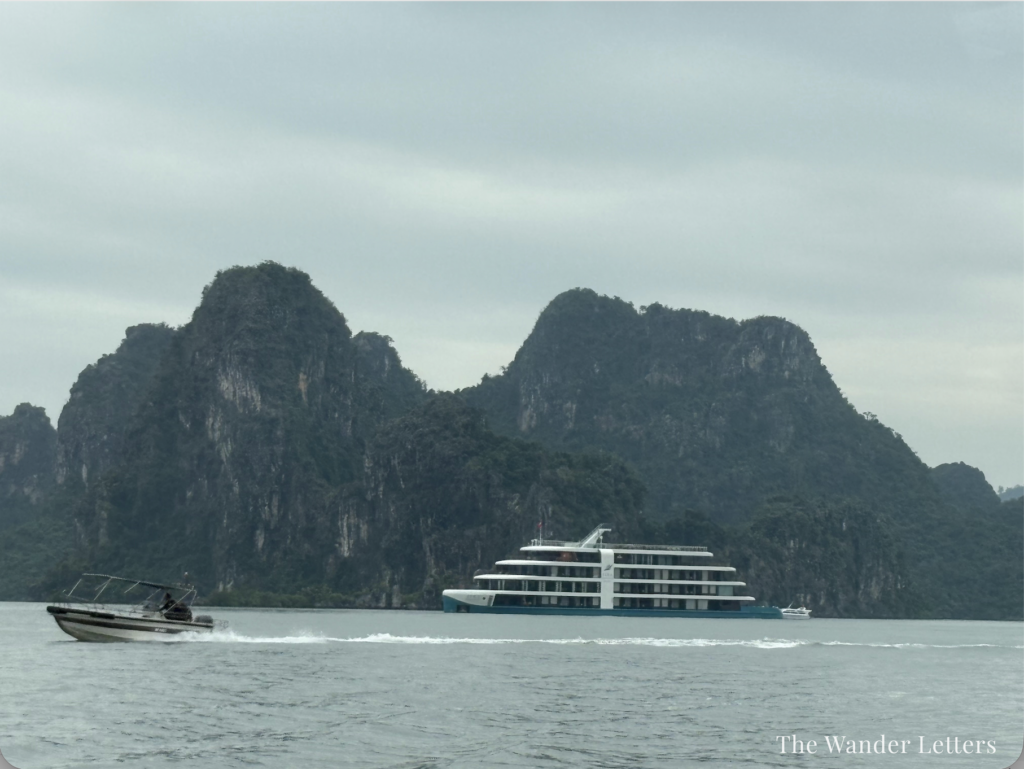
We booked the Mon Cheri cruise in Lan Ha Bay (a quieter, less crowded section of the wider Halong Bay area). From the moment we boarded, the experience was defined by a level of service and comfort we had not anticipated — five-course meals at every sitting, a full programme of kayaking, cooking class, Tai Chi at sunrise and squid fishing in the evening, and rooms with views of limestone karsts rising directly from the water.
The moment I think about most often: waking up, looking out the window, and genuinely being unable to process that we were on a boat. The karsts were that close, that real, that large.
One night felt short. If the budget allows, two nights on the cruise would transform the experience from extraordinary to unhurried — more time to simply float among those limestone formations without rushing to the next activity.
→ Read our full Halong Bay cruise guide here
Da Nang — The Rain Changed Everything
Da Nang was the destination that did not go to plan — and I am including that honestly because travel guides that only report success are not actually useful.
We had two nights in Da Nang and it rained. Not politely, occasionally — it rained in a way that made going outside genuinely difficult. Hoi An, which was on our list and which I had been looking forward to enormously, was flooded and inaccessible on the days we were there.
What we did see: the Golden Bridge — a stunning piece of architecture set in the hills above Da Nang, held up by two giant stone hands, with views across the hills and coast that are genuinely spectacular even in grey weather. This alone made Da Nang worthwhile.
Two nights is the right amount of time for Da Nang — enough to see the Golden Bridge, the beaches (weather permitting), the Dragon Bridge and the Han River area, without overstaying.
Hoi An note: If the weather is on your side, add at least one full day in Hoi An from Da Nang — the old town, the tailors, the lanterns at night and the White Rose dumplings are all worth the 30-minute drive. We missed it and regret it.
Best time to visit Da Nang: February to May for the driest weather. Avoid September-October (peak monsoon for the central coast).
Vietnam by the Numbers — Budget Guide
| Item | Approximate Cost |
|---|---|
| India–Vietnam flights (return, per person) | ₹25,000–₹45,000 depending on timing |
| E-visa per person | ~₹2,100 (approx $25) |
| Phu Quoc hotel (per night) | ₹7,000–₹13,000 |
| VinWonders (per person) | ₹3,500–₹4,500 |
| Island hopping (per person) | ₹1,500–₹2,000 |
| Halong Bay cruise (per person, 1 night) | ₹15,000–₹25,000 depending on operator |
| Sapa (family of 3, 2 nights all-in) | ₹13,000 |
| Da Nang hotel (per night) | ₹5,000–₹10,000 |
| Golden Bridge entry | ₹500–₹700 per person |
| Food (per person per meal, restaurant) | ₹400–₹800 |
Total estimated budget for a family of 3 (10-12 days): ₹3.5–₹5.5 lakh depending on hotel choices and cruise category.
Practical Tips for Indian Travellers
Currency: Vietnamese Dong (VND). ₹1 = approximately 285-300 VND. The numbers look enormous — a meal for ₹500 costs roughly 150,000 VND — which can be disorienting at first. Carry some cash for local markets and smaller establishments. USD is also widely accepted at tourist venues.
Getting around: Domestic flights are the most practical way to cover Vietnam’s length (the country is long and narrow — Hanoi to Ho Chi Minh is further than Mumbai to Delhi). Vietnam Airlines and VietJet are the main carriers. Taxis and ride-hailing apps (Grab) work well in cities.
Food: Vietnamese food is light, fresh and varied. Pho (rice noodle soup), bun cha (grilled pork with noodles), banh mi (baguette sandwiches), fresh spring rolls and an extraordinary range of seafood are all accessible and excellent. Vegetarian options are available but more limited — ask specifically.
Weather: Vietnam is long enough that weather varies significantly by region. The south (Ho Chi Minh, Phu Quoc) is warm year-round. The north (Hanoi, Sapa, Halong Bay) is cool in winter (December-February) and warm in summer. The central coast (Da Nang, Hoi An) has a distinct monsoon season September-November — avoid this period if central Vietnam is a priority.
Language: Vietnamese is the official language and is tonal — don’t attempt it beyond basic pleasantries unless you have time to study. English is spoken adequately in tourist areas and at hotels.
Safety: Vietnam is a very safe destination for families. Exercise normal urban caution in city centres (bag snatching from motorbikes does happen in Ho Chi Minh City’s tourist areas). Outside the cities, it is relaxed and low-risk.
Our Honest Vietnam Verdict
Vietnam surprised us. That is the most genuine thing I can say about it.
I did not expect a country this developed, this beautiful across so many different kinds of landscapes, this capable of delivering experiences — a cable car to Southeast Asia’s highest peak, a luxury cruise through UNESCO-listed karsts, a beach holiday with a world-class theme park — that feel genuinely extraordinary rather than merely pleasant.
My daughter’s first international trip could not have been better chosen. The scale of what she saw — the rice terraces of Sapa, the limestone formations of Halong Bay, the colour and energy of Phu Quoc — is the kind of thing that shapes how a young person understands what the world is and what it holds.
We will go back. To Phu Quoc for longer. To Ho Chi Minh City properly. To Hoi An when it is not flooded. Vietnam earns a second trip in a way that few destinations do on first encounter.
Vietnam — Our Other Posts
Everything you need for a complete Vietnam trip:
- 3 Days in Phu Quoc — Complete Travel Guide
- Where to Stay in Phu Quoc — North vs South
- Phu Quoc Budget Guide for a Family of 3
- VinWonders vs Grand World — Which is Better?
- Sapa Travel Guide — Cat Cat Village, Fansipan & the Glass Bridge
- Halong Bay Overnight Cruise — Lan Ha Bay Mon Cheri Review
Also read: Ultimate Laos Travel Guide | Ultimate Cambodia Travel Guide
We also have a complete 15-Day Laos + Vietnam + Cambodia Itinerary → for anyone who wants to do the full route we did.